
“Read a commercial pickle label lately? Here is what mass-produced achar changes, what it costs you in taste — and how to spot the good jars.
At a glance
- ✦ The oil swap nobody mentions
- ✦ Enter the preservatives
- ✦ The colour tells a story
- ✦ What sun-curing does that factories cannot
- ✦ How to read a pickle label like an expert
- ✦ Where PanchMantra stands
- ✦ The economics of an honest jar
- ✦ Questions to ask any pickle brand
- ✦ Taste the difference for yourself
Pick up a mass-market pickle jar in any supermarket and read the ingredient list. Somewhere after the vegetables and salt you will usually find a small parade of additions: refined vegetable oil, acetic acid, sodium benzoate, potassium metabisulphite, artificial colour. None of these existed in your grandmother's pickle. All of them exist for the factory's convenience.
This is not a rant against industry — large-scale food production solves real problems. But when it comes to achar specifically, the shortcuts change the product so fundamentally that homemade and mass-made pickle are almost different foods. Here is exactly where they part ways.
✦The oil swap nobody mentions
Traditional achar is made in cold-pressed mustard oil — expensive, pungent, and naturally antimicrobial. Its sharp compounds are the pickle's first line of defence and half of its signature flavour.
Most commercial pickles quietly substitute refined cottonseed, soybean or palm oil, which costs a fraction as much. But refined oil brings no protection and no character — it is simply a filler liquid. Which creates a problem: without mustard oil's defence, how do you stop the jar from spoiling?
✦Enter the preservatives
The industrial answer is chemistry. Sodium benzoate and potassium metabisulphite suppress microbial growth. Synthetic acetic acid delivers instant sourness so the factory can skip weeks of fermentation. The pickle goes from vegetable to shelf in days instead of weeks.
These additives are legal and considered safe within limits. But notice what has happened: the fermentation — the slow, living process that creates achar's complex tang, digestive benefits and depth — has been engineered out entirely. The sourness you taste is added, not developed. It is the difference between a matured pickle and vegetables in seasoned acid.
✦The colour tells a story
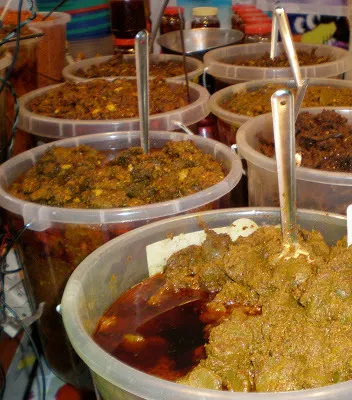
A traditional pickle gets its deep red-gold colour from chilli, turmeric and months in oil — and that colour naturally deepens and dulls over time. Factory pickles often stay unnaturally bright for years. That uniform neon red is usually artificial colouring, added because customers have been trained to read brightness as freshness.
Flip the logic: a pickle that looks a little rustic, with oil that has taken on the colour of its spices, is showing you evidence of real ingredients and real time.
✦What sun-curing does that factories cannot
The most expensive ingredient in traditional achar is not the mango or the oil — it is time. Two to three weeks of sun-curing does things no accelerated process replicates: moisture evaporates slowly, spices penetrate to the centre of each piece, fermentation builds layered sourness, and textures settle into that perfect yielding-but-firm bite.
A factory cannot park inventory in the sun for three weeks. So mass pickles are typically cooked or acid-treated for speed, producing pieces that are either mushy or raw-crunchy, with masala sitting on the surface instead of soaked through. Your tongue knows the difference even when the label will not admit it.
✦How to read a pickle label like an expert
Five things to check before any jar goes in your cart. Oil: it should name mustard oil — ideally cold-pressed or kachi ghani — not a vague vegetable oil blend. Preservatives: look for the class II preservative mentions or E-numbers; a traditional pickle needs none. Acidity: acetic acid high on the list means fermentation was skipped. Colour: any added colour is a shortcut flag. And the ingredient order: vegetables and salt should lead, not oil and water.
One more tell that never lies: the price. Real mustard oil, genuine sun-curing and small batches cost money. A suspiciously cheap achar has saved that money somewhere you would not approve of.
✦Where PanchMantra stands
We make pickles the way this article describes because we genuinely believe the old method is better — not as nostalgia, but as food. Every PanchMantra jar: cold-pressed mustard oil only, zero synthetic preservatives, zero artificial colour, full sun-curing, small batches from an FSSAI certified kitchen. Read our labels against any supermarket jar and the difference is not marketing. It is the ingredient list itself.
✦The economics of an honest jar
It helps to see the numbers from the maker's side. Cold-pressed mustard oil costs three to four times more than refined blends. Sun-curing occupies space and capital for weeks while a factory line turns inventory in days. Small batches mean real hands doing real work instead of machines running around the clock. Genuine seasonal produce — winter carrots, summer mangoes, wild kair — costs more than year-round cold-storage vegetables.
Add it up and an honest pickle simply cannot compete with a factory jar on price. It competes on the only thing that matters once the jar is open: what it tastes like and what is in it. When you pay more for a traditional achar, you are not paying for a fancier label — you are paying for the ingredients the cheap jar quietly removed.
✦Questions to ask any pickle brand
Before you trust a jar, five questions cut through every marketing claim. Which oil, exactly? Is the sourness fermented or added? Are there any preservatives or colours — yes or no? When was this batch made, and how big was it? And can they tell you where the main vegetable came from? A maker doing things honestly will answer all five with pride and specifics. Evasive answers are an ingredient list of their own.
Your grandmother could not have written a food-safety audit, but she knew exactly what belonged in a pickle jar: vegetables, salt, spice, mustard oil, sunshine and patience. Sixty years later, that list has not needed a single addition.
✦Taste the difference for yourself
The best argument is not an article — it is a side-by-side taste. Open a supermarket jar and a traditionally made achar on the same plate. Notice the colour: neon against deep, honest red-gold. Smell them: sharp acetic sting against the warm roundness of mustard oil and matured spice. Taste the texture: surface-coated crunch against masala soaked to the centre. Five minutes of comparison will teach you more than any label ever could — and once your tongue knows the difference, it does not forget.
Written by
PanchMantra Kitchen
Recipes, pickle science and stories from the family kitchen behind PanchMantra — where every jar is still made by hand, the way our grandmothers taught us.

Join the Conversation
0 comments
Login to share your thoughts on this article.
Login to Comment