
“Gajar, gobhi, adrak, kachi haldi — winter is secretly India's greatest pickling season. A guide to the jars worth making and eating right now.
At a glance
- ✦ Gajar ka achar — the winter classic
- ✦ Kachi haldi — the golden root
- ✦ Adrak ka achar — sharp, warming, essential
- ✦ Gobhi shalgam — the Punjabi masterpiece
- ✦ Why seasonal pickling matters
- ✦ Building your winter pickle plate
- ✦ The specialists: methi and hari mirch
- ✦ Winter storage: easier, with one trap
- ✦ A winter plate to try this week
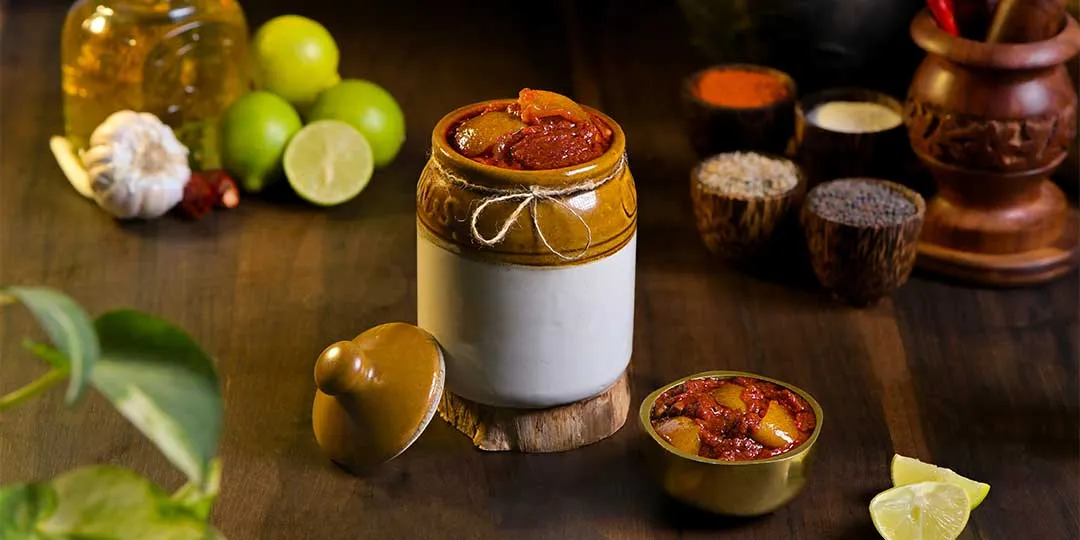
Everyone thinks of summer as pickle season — mangoes, sunshine, rows of jars on the terrace. But ask any serious pickle household and they will tell you a secret: winter is when the most interesting achars are made. The cold months bring a parade of vegetables at their absolute peak — crimson carrots, tight cauliflower, juicy ginger, fresh turmeric root — and the gentle winter sun is perfect for slow curing without spoilage risk.
Here is your guide to the great winter pickles of North India: what makes each special, and why eating seasonally applies to the pickle jar as much as the sabzi.
✦Gajar ka achar — the winter classic
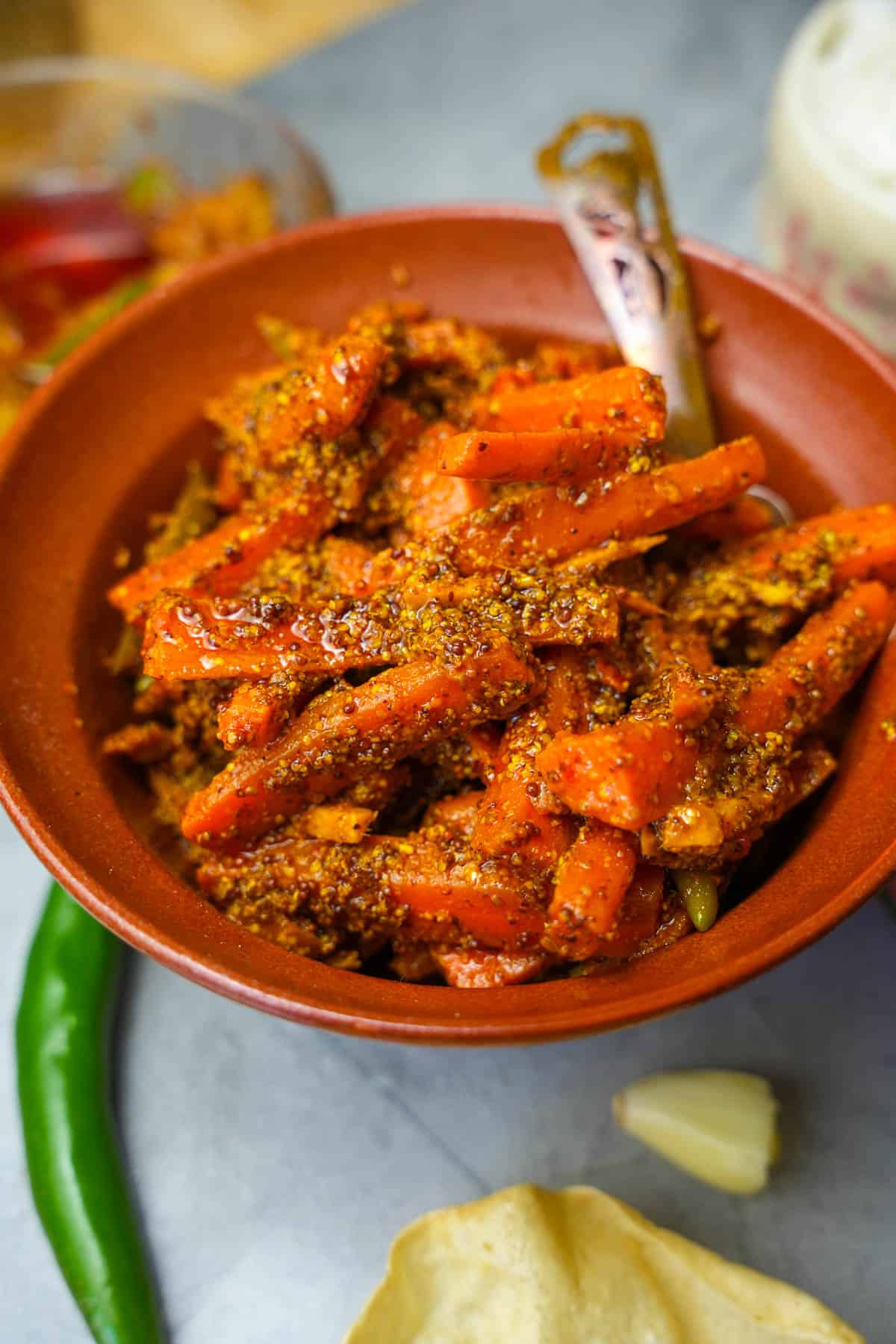
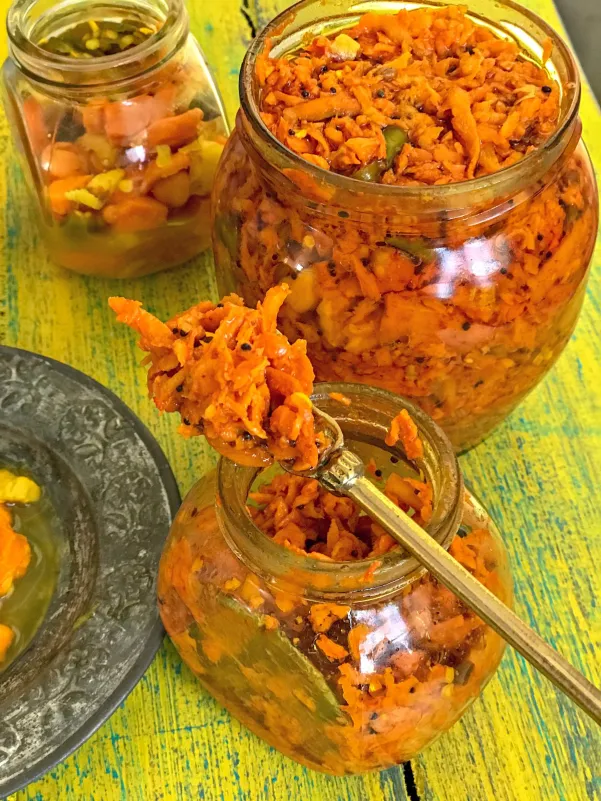
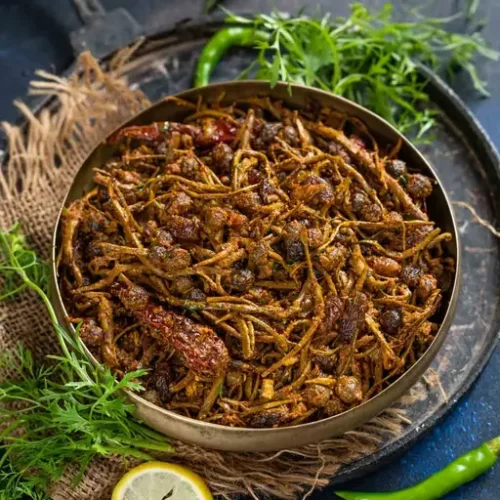
Winter carrots are a different vegetable from their pale summer cousins — deep red, sweet and crisp, available for barely three months. Pickled in mustard oil with fennel and mustard seed, they keep a gentle crunch and develop a sweet-sour-spicy balance that makes gajar ka achar the most snackable pickle in the Indian repertoire.
It is also the perfect gateway pickle for children and mild-palate eaters: less fiery than mango or chilli, with natural sweetness underneath the spice. On a winter plate of makki roti and saag, it is not a condiment — it is a requirement.
✦Kachi haldi — the golden root
Fresh turmeric root looks like slim ginger and stains everything it touches a glorious gold. Available only in the cold months, it is prized in Ayurveda as a warming winter food, and modern nutrition agrees there is something to the tradition — fresh turmeric carries curcumin along with volatile oils lost in the dried powder.
As an achar, kachi haldi is earthy, gently bitter and warming, usually paired with lemon juice and green chilli. Many families eat a small spoon daily through winter almost as a tonic — the rare pickle eaten as much for wellness as for taste. Our Turmeric Pickle bottles exactly this tradition.
✦Adrak ka achar — sharp, warming, essential
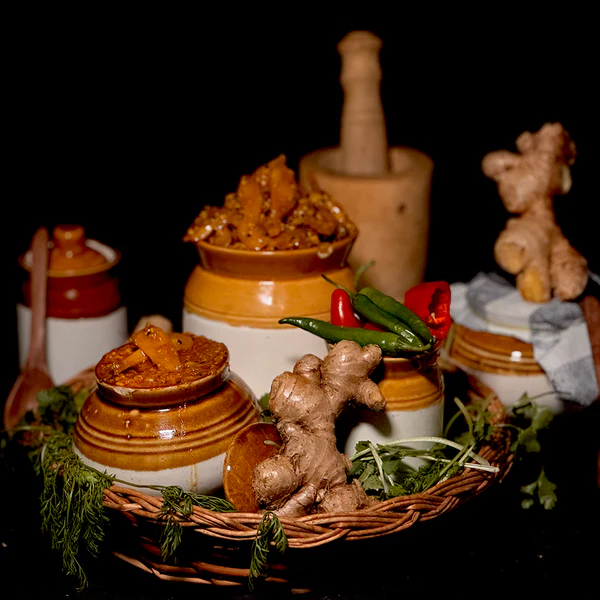
Winter ginger is young, juicy and fierce in the best way. Sliced fine and pickled with lemon, it becomes the achar that cuts through winter's heaviest food — think rich dals, gajar halwa afternoons and wedding-season feasting. A few slivers alongside a heavy meal work like a palate reset button.
Traditional households also swear by ginger pickle through cough-and-cold season. Whatever the science says about that, the warming bite on a foggy December morning is its own medicine.
✦Gobhi shalgam — the Punjabi masterpiece
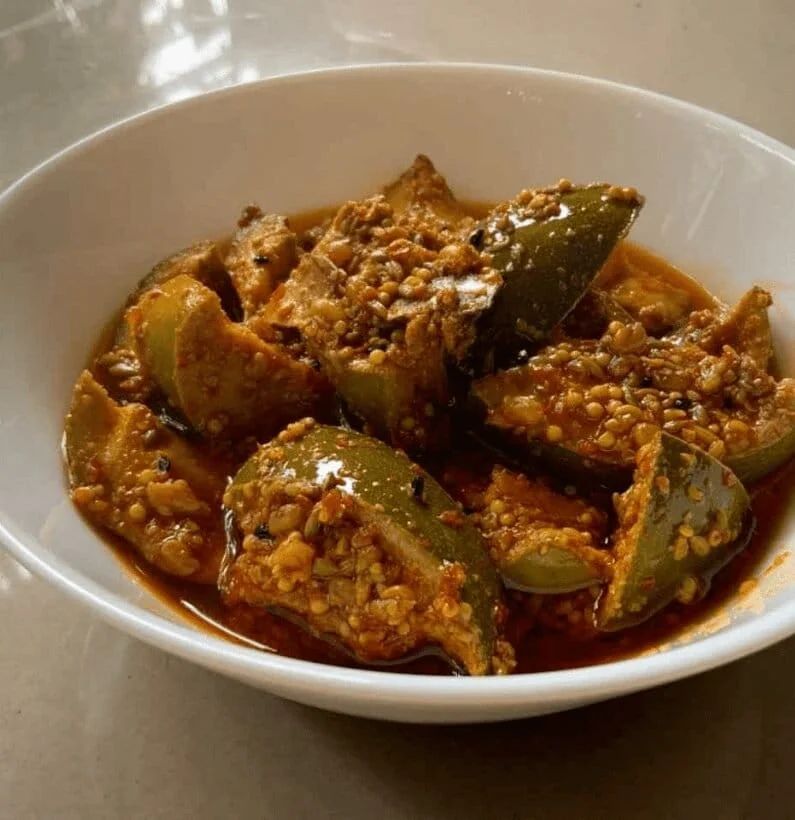
If Rajasthan's winter gift is kair sangri, Punjab's is gobhi shalgam gajar achar — cauliflower, turnip and carrot in a sweet-sour masala mellowed with jaggery. It is a cooked pickle, unusual in the tradition, with a deep brown-red gravy that clings to every floret.
This is the pickle of Punjabi winters, made in enormous quantities in November and eaten until the jars run dry — usually well before spring. Its balance of sweet, sour and warm spice makes it almost a relish, spooned generously rather than nibbled.
✦Why seasonal pickling matters
There is a practical reason our grandmothers pickled by season: vegetables preserved at their peak taste better for the entire year. A winter carrot pickled in January carries its sweetness into July. An off-season carrot pickled in June is watery and bland from day one, and no masala can rescue it.
Seasonality is also why a good pickle maker's shelf changes through the year — mango and green chilli jars born in summer, carrot and turmeric jars born in winter. If a brand offers every pickle in every month with identical taste, somewhere the seasons have been engineered out.
✦Building your winter pickle plate
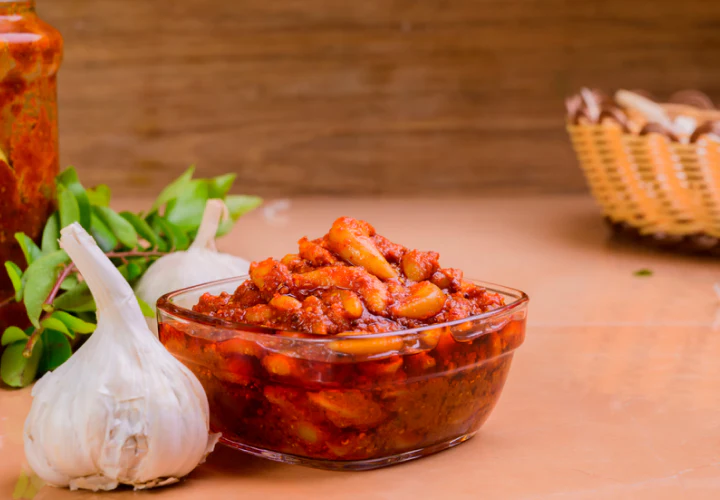
Our suggestion for the cold months: keep three jars going. One warming root pickle — ginger or fresh turmeric — for daily spoonfuls. One vegetable classic — carrot or mixed — for meals. And one fiery constant — red chilli or garlic — for the days when only heat will do.
✦The specialists: methi and hari mirch
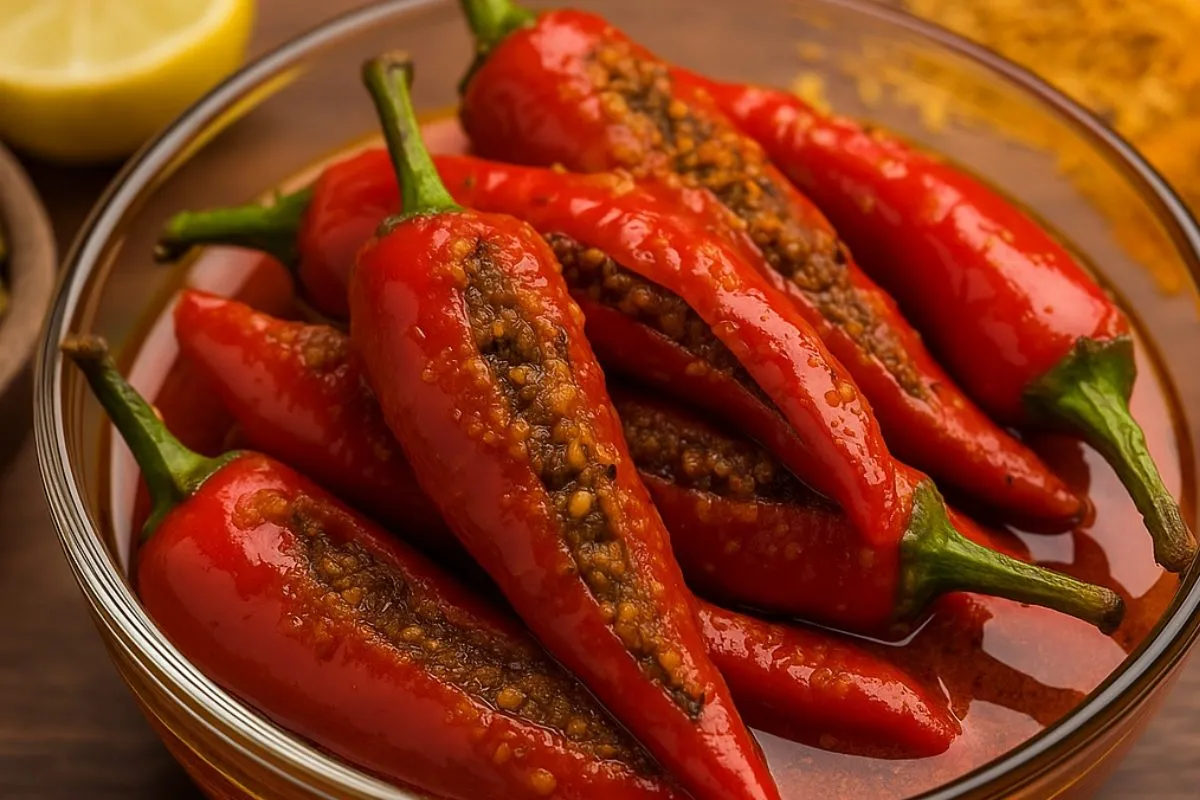
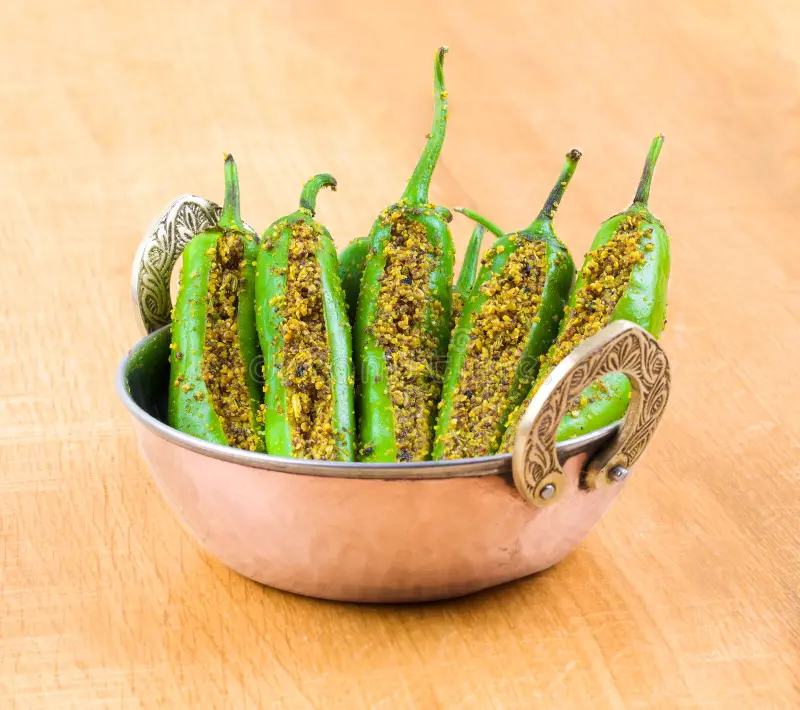
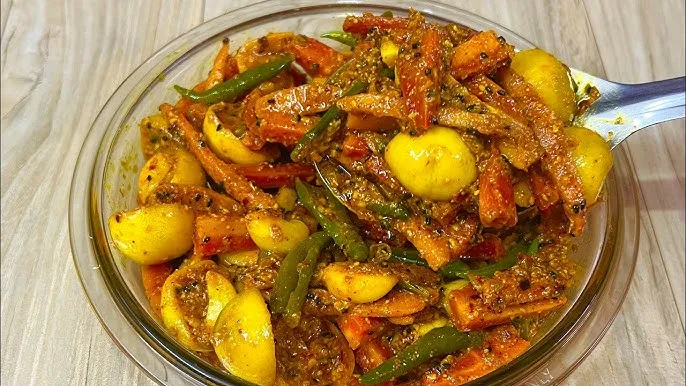
Two more winter jars deserve their place on the shelf. Fresh fenugreek — methi — makes a bittersweet pickle beloved in Rajasthan, often combined with dried berries or raisins into a sweet-bitter masterpiece that pairs unreasonably well with parathas. And winter's green chillies, plump and only moderately hot, make the season's brightest pickle: slit, stuffed with a tangy fennel-mustard masala, and matured until the heat mellows into flavour. If summer's red chilli pickle is a roar, winter's hari mirch achar is a confident grin.
✦Winter storage: easier, with one trap
The cold months are kind to pickle keepers — cooler kitchens mean slower spoilage and more forgiving jars. But winter hides one trap: mustard oil thickens and can turn semi-solid in the cold, leaving pieces poking above the surface unprotected. Check your jars on the coldest weeks; if the oil has seized, stand the jar in mild sun for an hour or warm it gently near — never on — the stove until the oil flows and settles back over every piece. Fifteen minutes of care in January protects the jar until June.
At PanchMantra, our winter batches follow the season honestly: gajar pickled when carrots blush red, kachi haldi and adrak cured in the brief window when the roots are young. Eat with the season — your pickle jar, like your kitchen, is at its best when it follows the sun.
✦A winter plate to try this week
Put the theory on the table tonight: hot khichdi or makki ki roti, a spoon of ghee, a piece of gajar achar for sweetness, a sliver of adrak achar for warmth, and a little kachi haldi on the side for that golden, earthy bite. Add a bowl of curd and you have the complete winter formula that North Indian homes have trusted for generations — simple food made memorable by the jars beside it. That, in the end, is the whole magic of achar: it turns an ordinary meal into one you remember.
Written by
PanchMantra Kitchen
Recipes, pickle science and stories from the family kitchen behind PanchMantra — where every jar is still made by hand, the way our grandmothers taught us.

Join the Conversation
0 comments
Login to share your thoughts on this article.
Login to Comment