
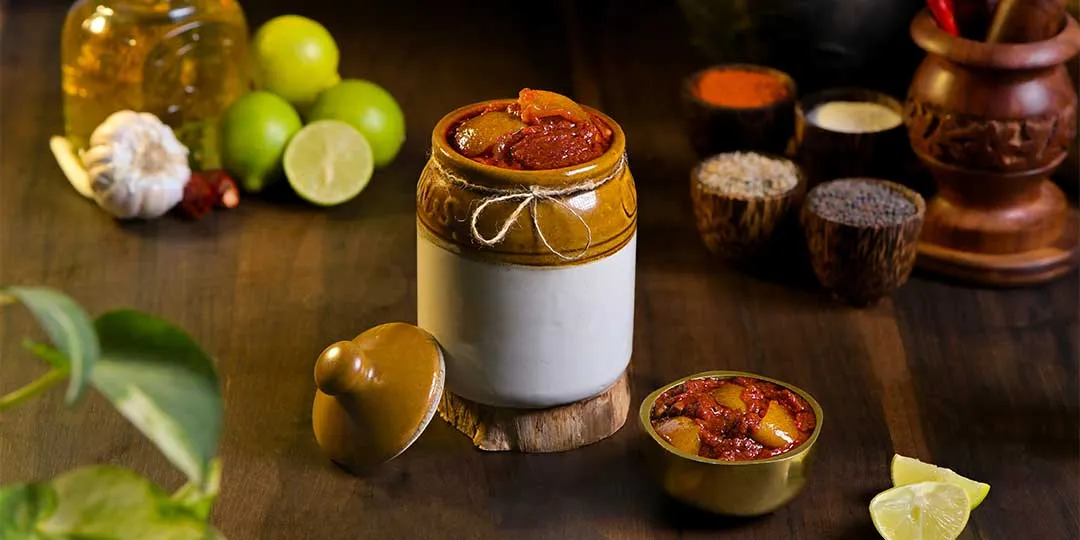
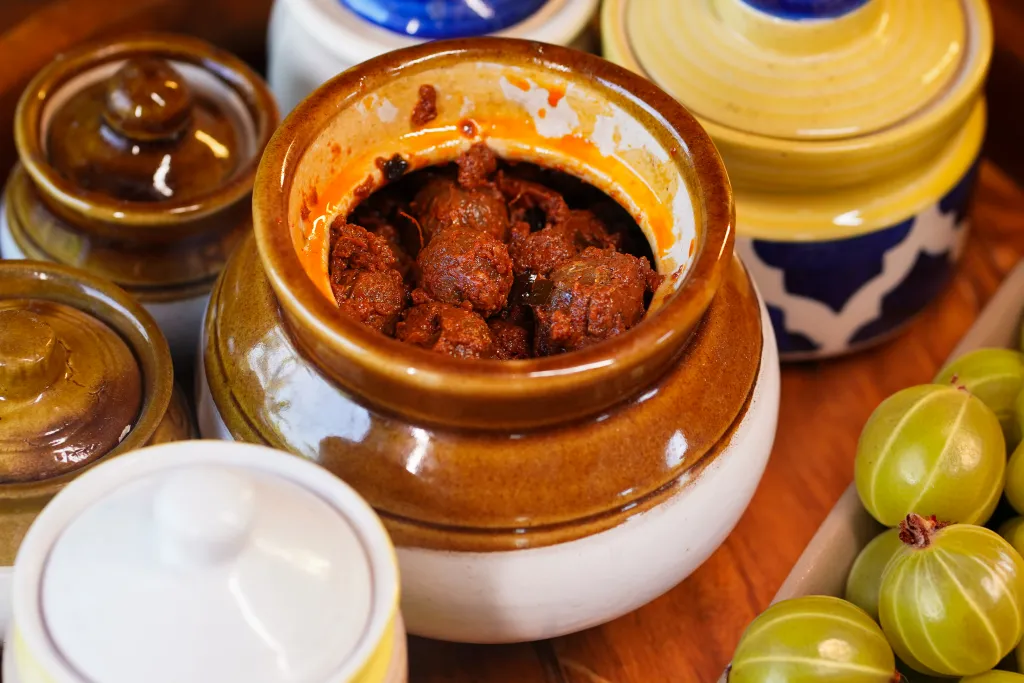
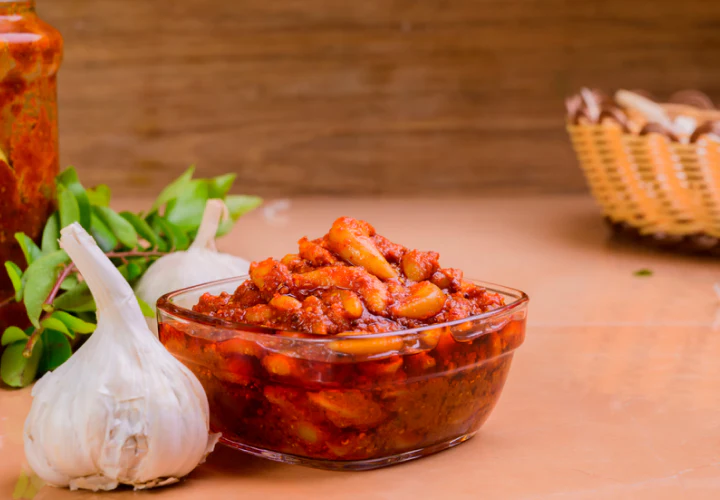
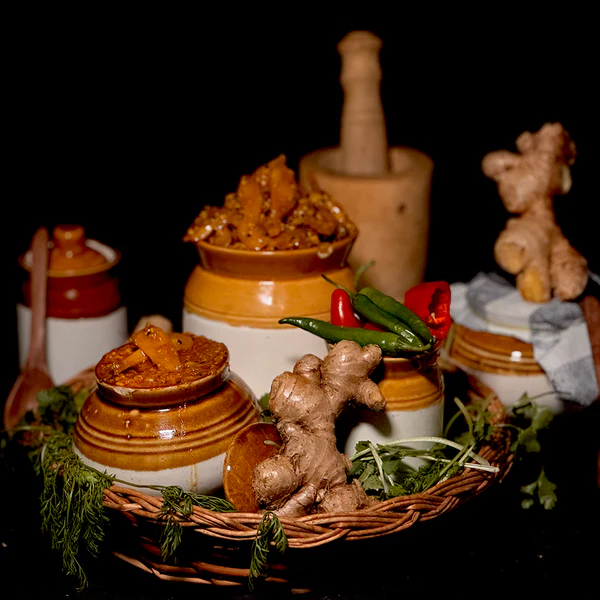

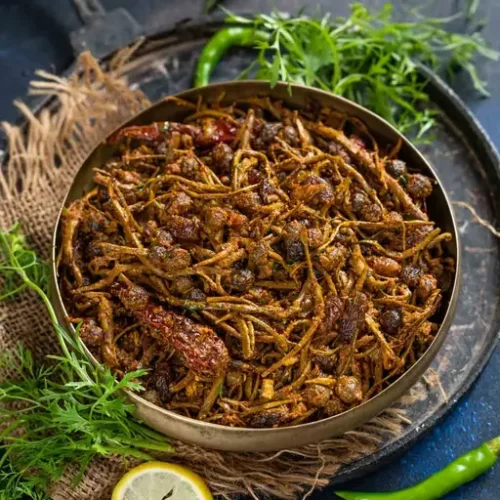
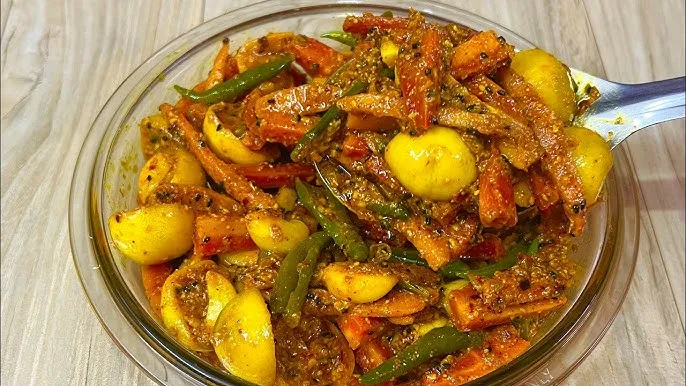
“The full traditional recipe for aam ka achar — ingredients, sun-curing, timing and the mistakes that ruin most first attempts.
At a glance
Every summer, when raw mangoes flood the markets, the same question travels through Indian kitchens: should we make achar this year? If you have ever wanted to try, this is the complete traditional method — the one followed in Rajasthani homes for generations, with every step explained and every common mistake flagged before you make it.
Fair warning: making great mango pickle is simple, but it is not quick. The recipe takes twenty minutes of work and about three weeks of patience. That patience is exactly what you taste in the final jar.
✦Choosing the right mangoes
Everything starts at the market. You want raw, rock-hard, completely green mangoes — the sour, fibrous varieties sold specifically for pickling. Press each one with your thumb: if it yields even slightly, leave it. A soft mango carries extra moisture, and moisture is the enemy of a long-lasting pickle.
Buy a kilo for your first attempt. Look for unblemished skin, because cuts and bruises are entry points for spoilage. Traditional picklers also insist the mangoes be completely dry — never buy them rain-wet, and never wash them right before cutting. Wash a day earlier and let them dry fully in the shade.
✦The ingredient list
For one kilo of raw mango you will need: 100 grams of salt, 50 grams of split fenugreek seeds, 25 grams of fennel seeds, 15 grams of nigella seeds, 20 grams of red chilli powder, 10 grams of turmeric, a pinch of asafoetida, and around 300 ml of cold-pressed mustard oil. That oil quantity is not a typo — a proper achar swims in oil, because the oil is the preservative.
The one non-negotiable is the oil itself. It must be kachi ghani — cold-pressed — mustard oil, with its full pungency intact. Refined oil has had its protective compounds stripped away, and pickles made in it routinely spoil within weeks.
✦Cutting and salting
Cut the mangoes into inch-sized pieces with the inner kernel removed, keeping the hard skin on — the skin holds each piece together over the long months. Toss the pieces with half the salt and all the turmeric, then spread them on a clean cotton cloth in mild sunlight for a full day.
This step is where homemade pickles are won or lost. The salt pulls water out of the fruit and the sun carries it away. Skip it, and all that water ends up in your jar, diluting the salt and inviting fungus. After a day of sun the pieces should look slightly shrivelled at the edges — that is exactly right.
✦Making the masala
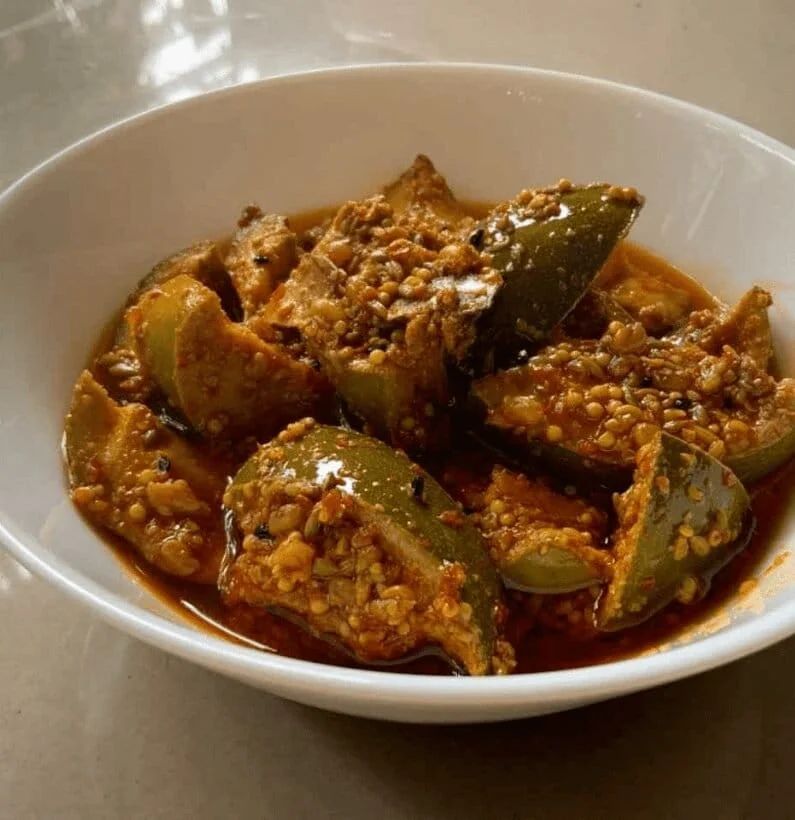
Dry-roast the fennel and fenugreek very lightly — just until aromatic, not browned — and crush them coarsely. Mix with the remaining salt, chilli powder and asafoetida. Warm the mustard oil until it just begins to smoke, then switch off the flame and let it cool completely. This one-time smoking mellows the raw bite of the oil while keeping its preservative strength.
Combine the sun-dried mango, the spice mix and about two-thirds of the cooled oil in a large dry bowl. Mix with absolutely dry hands or a dry spoon until every piece wears a thick coat of masala.
✦Jarring and the three-week wait
Pack the pickle into a clean, bone-dry glass or ceramic jar, pressing down gently to remove air pockets. Pour the remaining oil on top until the pieces are fully submerged. Tie a cotton cloth over the mouth and set the jar in gentle sunlight for two to three weeks, stirring every second or third day with the dedicated dry spoon.
During these weeks the magic happens: the mango softens, the spices bloom, gentle fermentation builds depth and tang, and the oil turns a deep, glossy red. Taste at the two-week mark. When the skin yields easily and the sourness has rounded into something complex, your achar is ready.
✦The mistakes that ruin first attempts
Almost every failed home pickle traces back to one of four errors. Wet equipment — a damp jar, spoon or hand introduces the moisture that grows fungus. Too little oil — pieces poking above the oil line will spoil first. Refined oil — without mustard oil's natural pungency, the jar has no defence. And impatience — eating from the jar in week one with random kitchen spoons, introducing contamination before the pickle has built its acidic armour.
If white fuzz ever appears, be honest with yourself: surface mould means the jar's protection failed, and the safest choice is to let that batch go.
✦When it makes sense to just buy it
We will say this with love: not everyone has three weeks of sun, a spare balcony and the patience for daily stirring. If your first batch fails — and many first batches do — you have not failed as a cook; you have just discovered why grandmothers guarded their technique so carefully.
That is exactly the gap PanchMantra exists to fill. Our Mango Pickle follows this very recipe — same sun-curing, same kachi ghani mustard oil, same three-week patience — made in small batches in an FSSAI certified kitchen, so you get the homemade taste without the homemade risk.
✦Regional variations worth knowing
Once you have the base method down, India offers a lifetime of variations. Punjabi aam ka achar leans hard on fennel and mustard oil, exactly as described here. Rajasthani versions often add extra red chilli and a touch more asafoetida — desert palates like their heat honest. In the South, avakaya from Andhra uses sesame oil instead of mustard, with a fierce chilli-garlic masala that has its own devoted following. Gujarati chundo goes the opposite direction entirely: grated mango cooked down with sugar into a sweet-hot preserve.
The beauty is that the fundamentals never change — raw sour mango, salt, oil, patience. Master one style and you can travel the whole map from your kitchen.
✦Storing your finished pickle
Your reward for three weeks of patience deserves protection. Store the jar in a cool, dry spot away from direct steam and stove heat. Always use that one dedicated dry spoon. Press the pieces below the oil line after every few uses, and top up with a little warmed-and-cooled mustard oil if the level drops. Handled this way, your homemade batch will comfortably last a full year — though in most households, no jar of good aam ka achar has ever survived that long. It gets finished first, which is the best compliment a pickle can receive.
Written by
PanchMantra Kitchen
Recipes, pickle science and stories from the family kitchen behind PanchMantra — where every jar is still made by hand, the way our grandmothers taught us.


Join the Conversation
0 comments
Login to share your thoughts on this article.
Login to Comment